Small spaces
A small home office: plan the desk before the décor
Test the screen, keyboard, chair and storage arrangement before choosing accessories for a compact workspace.
A compact home office works when the work equipment fits, not simply when a desk fits the gap. Begin with the objects you use together and the chair in its working position. Decorative shelves and matching boxes can follow once that basic arrangement is settled.

Use the space beyond the desktop
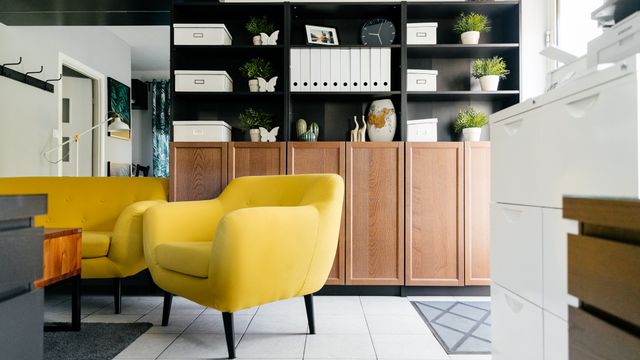
IKEA’s hallway workspace places a narrow desk alongside wall storage and a chair that can be tucked away. The useful idea is to separate the active work surface from the things stored nearby. Sketch those two areas independently: the screen and keyboard need room during work, while papers and supplies can occupy a different surface. The example is a retail room setting, so check it against your equipment rather than copying its shopping list.
IKEA · Compact workspace layout
Check the equipment arrangement
The HSE workstation illustration places the screen and keyboard centrally and shows how the chair, mouse and screen relate to one another. Its laptop guidance includes separate input devices when the display is raised for prolonged use. Before buying a very shallow desk, compare its usable surface with that illustrated arrangement. The linked guidance is the place to check the full setup; a small-room styling example does not replace an individual workstation assessment.
Make it useful
Before moving the desk
Compare your own room and routine rather than assuming one layout suits everyone.